How to Work With Real Estate Investor Clients
Working with real estate investor clients is a different job than working with retail buyers. Retail buyers decide on feel. Investors decide on numbers, and they will not make an offer until those numbers exist. That single difference explains most of the friction agents run into: the deal is fine, the client is interested, and nothing happens for three weeks.
The fix is not more listings. It is removing the analysis work from your client's side of the table.
Watch the full walkthrough below, or read on.
What Real Estate Investor Clients Actually Want
Retail buyers want to be shown possibilities. Investor clients want a defensible answer to one question: does this property hit my return threshold?
Everything else is secondary. The kitchen finish does not matter if the cash-on-cash return is 3%. A dated bathroom is irrelevant if the ARV supports the spread. When you send an investor a listing without numbers attached, you are handing them homework, not an opportunity.
That reframe changes what your job is. You are not sourcing properties. You are sourcing analyzed properties.
Why Investor Deals Stall
Investor clients don't reject good deals. They reject the work.
Here is the actual sequence when an agent forwards a raw listing to an investor:
- The listing lands in the inbox
- The investor has to pull rent comps
- They have to estimate taxes, insurance, and vacancy
- They have to pull sales comps for ARV if it is a flip or BRRRR
- They have to build the model
- They have to do this for every property you send
Step six is where it dies. An active investor might look at forty properties to buy one. Nobody underwrites forty properties by hand. So they underwrite three, pass on all three, and your pipeline goes quiet.
The deal did not fail on merit. It failed on friction.
The Pre-Analyzed Deal Report Workflow
Top agents working with investor clients have moved to a different default: never send a property without the analysis attached.
The workflow is straightforward.
Step 1: Know the client's buy box before you look at anything
Before you analyze a single property, you need their thresholds in writing:
- Target strategy (buy and hold, BRRRR, or fix and flip)
- Minimum cash-on-cash return
- Minimum cap rate, if they use one
- Maximum purchase price and available capital
- Target markets and submarkets
- Rehab appetite, from turnkey to full gut
Without this you are guessing at what qualifies. With it, you can screen a property in under a minute.
Step 2: Analyze before you send, not after
This is the step that separates the agents who close investor deals from the ones who forward listings. The analysis happens on your side.
Pull the property, populate the inputs that drive the return, and run it against the client's thresholds. If it does not clear, you do not send it. If it clears, it goes out with the numbers already in it.
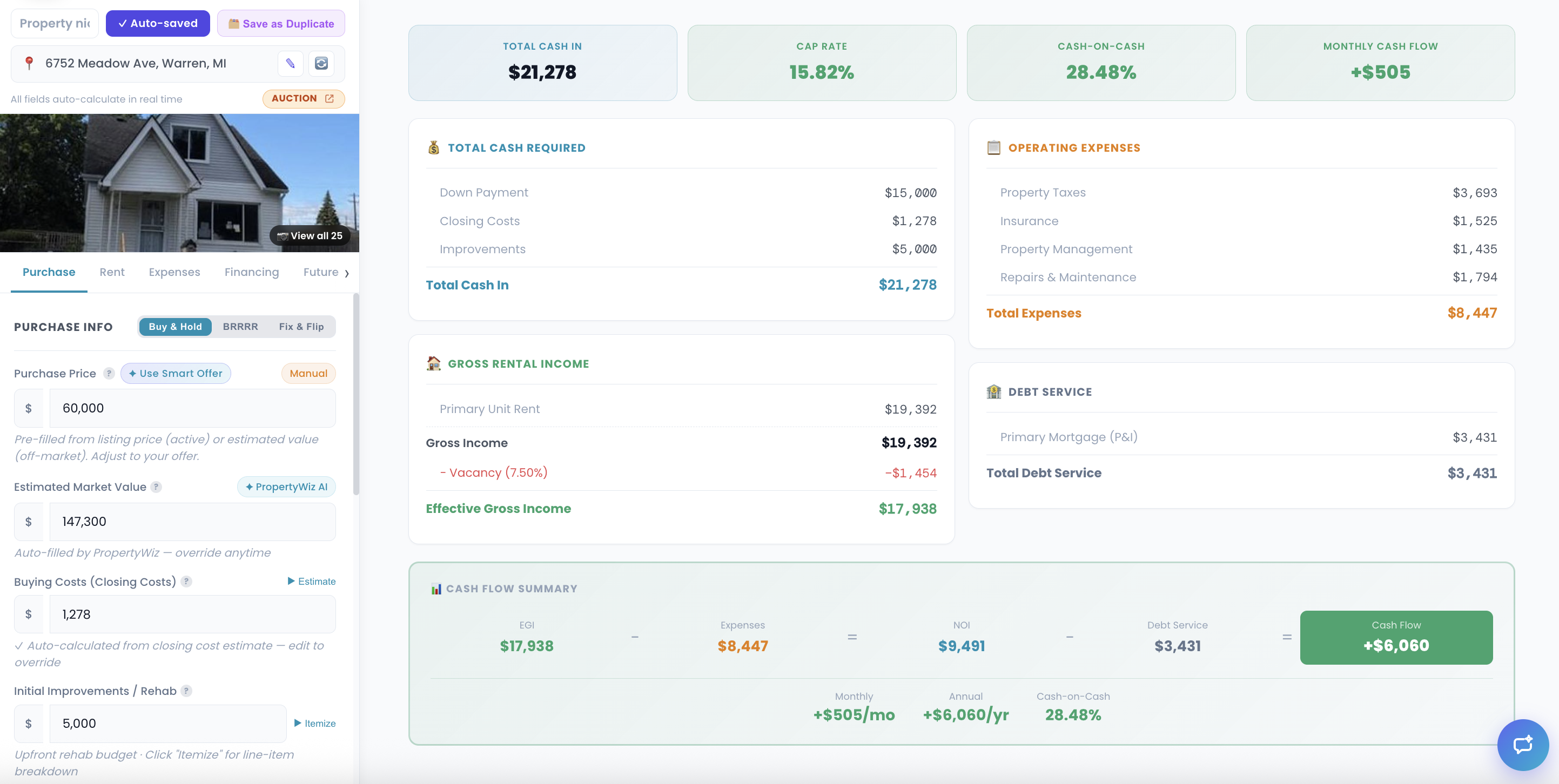
The inputs that actually move the return are market value, market rent, property taxes, insurance, appreciation assumptions, sales comps and ARV, vacancy rate, and inflation. Getting these wrong by a small margin compounds into a badly wrong answer over a ten-year hold, which is why pulling them from live data beats estimating them.
Step 3: Send a report, not a spreadsheet
There is a difference between sending numbers and sending a decision-ready document. A spreadsheet asks the client to verify your work. A clean investment report asks them to make a call.
The report should show the strategy, the assumptions, the return metrics, and the sensitivity around them, in a format they can open on a phone. If your investor client has to sit at a desk to review your analysis, you have added friction back in.
Step 4: Let them change your assumptions
The most common mistake is presenting your numbers as the answer. Investors have their own view on rent growth, on rehab costs, on exit cap. Send the analysis in a form they can adjust, and they will trust the output more, not less. Their numbers, their decision.
Matching the Analysis to the Strategy
A single set of return metrics does not work across strategies. Investor clients running different playbooks need different outputs from you.
Buy and hold
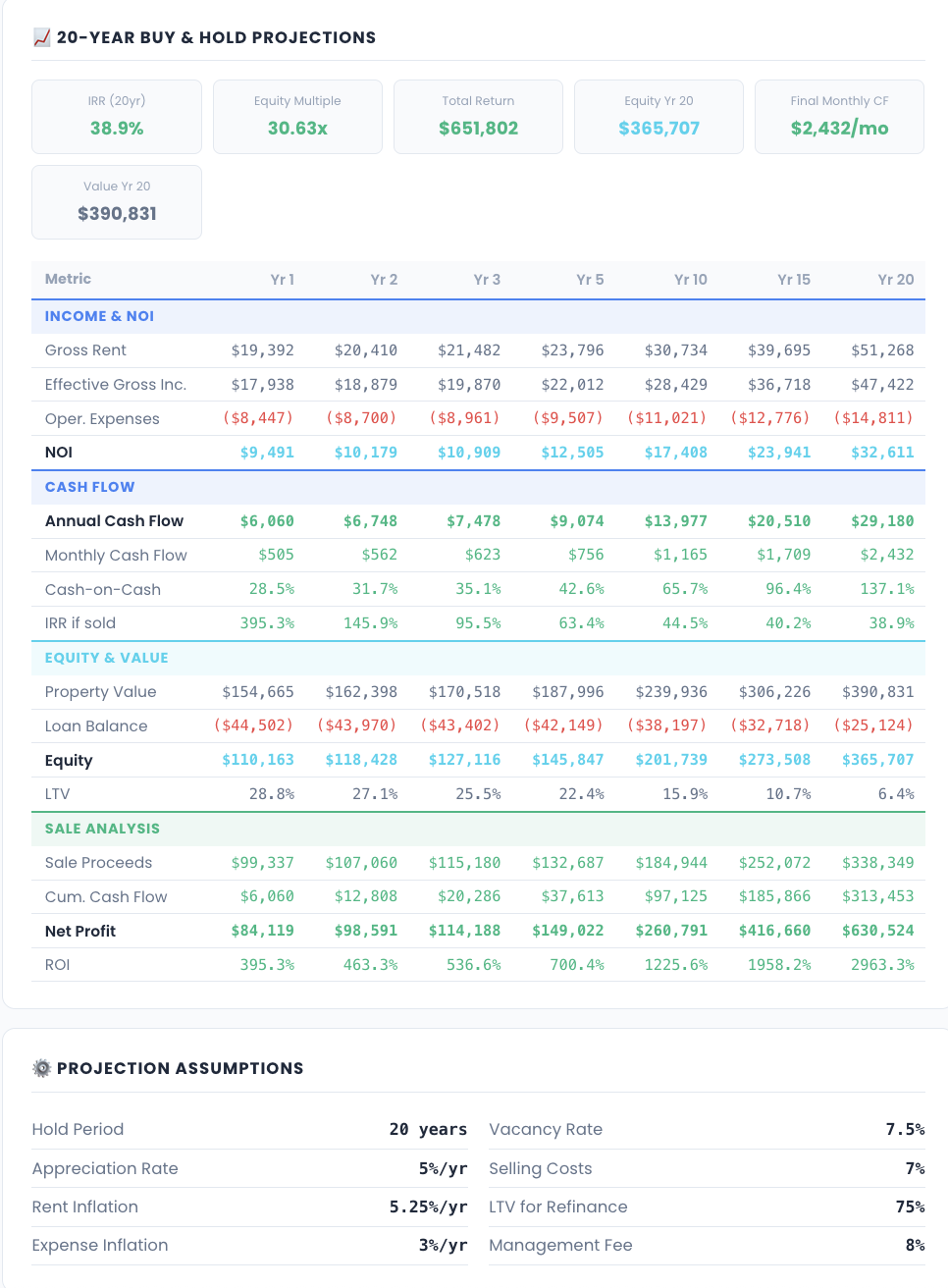
The metrics that matter are cash-on-cash return, cap rate, and long-hold total return including appreciation and principal paydown. Rent accuracy and vacancy assumptions drive most of the variance here.
BRRRR
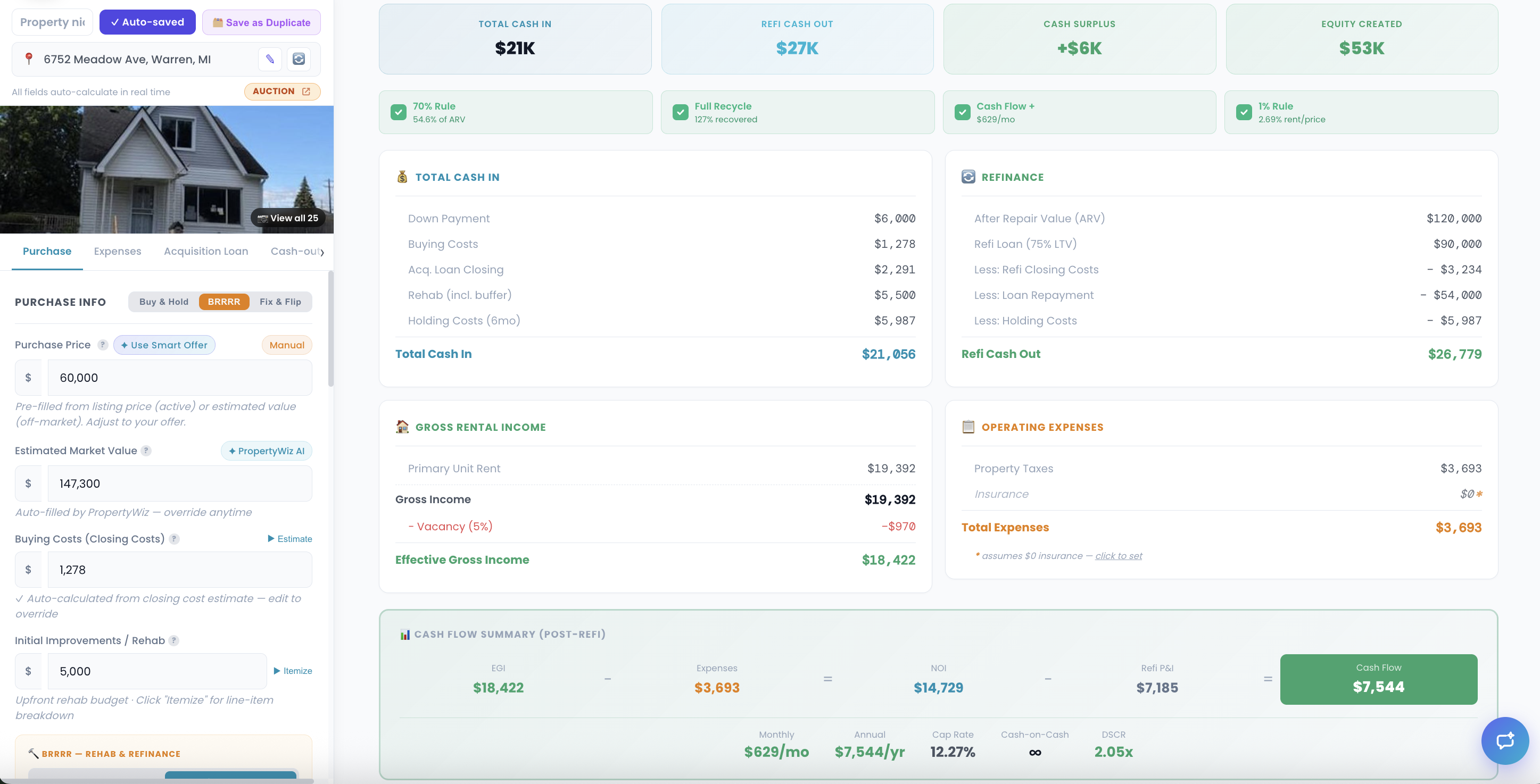
The whole deal turns on ARV and the refinance. If the after-repair value does not support pulling the capital back out, the strategy fails regardless of how good the rent looks. Sales comps carry more weight than rent comps at the screening stage.
Fix and flip
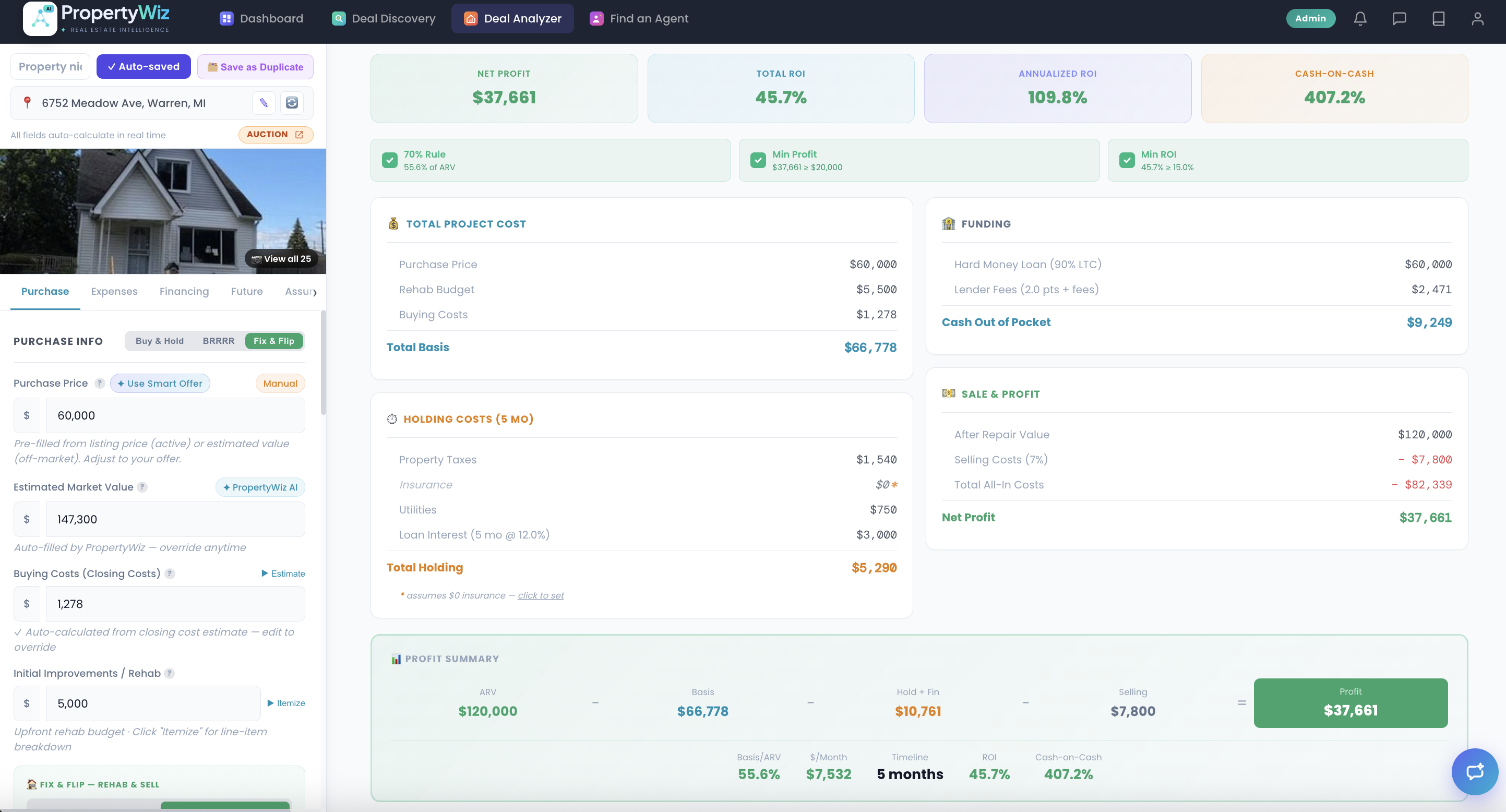
Shortest timeline, tightest margins, most sensitive to rehab cost error. ARV and holding costs are the two inputs worth the most scrutiny.
If you are still deciding which markets to point investor clients toward, the underlying market fundamentals matter more than any individual property.
How This Changes Your Position With the Client
When you forward listings, you are interchangeable. Any agent with MLS access can do that.
When you send analyzed deals screened against a stated buy box, you become the person whose judgment they rely on. That is a different relationship, and it is the one that produces repeat transactions. Investors buy more than once. Retail buyers mostly do not.
The practical result is that the conversation shifts from "can you send me some properties" to "let's go look at this one before we make an offer."
Where PropertyWiz AI Fits
Everything above is doable manually. It is just slow, and slow is why most agents do not do it.
PropertyWiz AI is the research engine that removes the manual step. Pull up any property and it populates the inputs that drive the return - market value, rent, taxes, insurance, appreciation, sales comps and ARV, vacancy, and inflation - from live data. You review the deal instead of building it, then send a clean investment-grade report for buy and hold, BRRRR, or flip that your client can open on any device and adjust with their own assumptions.
Start with a free basic account, or try Pro or Pro Plus free for 7 days.
[INTERNAL LINK: www.propertywiz.ai/pricing]
Video transcript
Related articles
Real Estate Investment Analysis Software vs Calculators
Real estate calculators run on static assumptions that are often wrong. See how real estate investment analysis software pulls live data to price deals accurately.
5 min readBest BRRRR Markets 2026: How to Find Them Yourself
The best BRRRR markets 2026 aren't a fixed list of cities — they're markets with soft purchase prices, strong rent-to-price ratios, and lenders that appraise to real value. Here's how to screen for them.
5 min readHow to Analyze a BRRRR Deal on a Single-Family Home
Learn how to analyze a BRRRR deal on a single-family home step by step: the refinance math, the 75% LTV trap, and the numbers that decide whether you leave money in.
5 min readAnalyze your next deal in seconds
PropertyWiz AI pulls live data and runs Buy & Hold, BRRRR, and Fix & Flip numbers for you.
Get started free →