The PropertyWiz AI Blog
Guides, market breakdowns, and video tutorials to help you find and analyze better real estate deals.
102 articles

How to Lower Landlord Insurance Premiums: 9 Real Levers
Learn how to lower landlord insurance premiums with nine concrete levers—from deductibles to policy structure—that actually move your annual cost.

Average Landlord Insurance Cost by State: A 2026 Guide
Average landlord insurance cost by state runs roughly $1,200–$3,500 a year. Here's how to estimate it accurately before you buy and underwrite.

How Insurance Costs Affect Your DSCR (With Examples)
Insurance costs directly lower your DSCR by raising operating expenses and shrinking NOI. Here's exactly how much, with real numbers and fixes.

Landlord Insurance vs Homeowners Insurance for Rentals
Landlord insurance vs homeowners insurance: the real differences, what each covers, and why using the wrong policy can void a claim on your rental.

Why Did My Landlord Insurance Go Up? 7 Real Reasons
Why did your landlord insurance go up? Usually reinsurance costs, inflation on rebuild values, and regional catastrophe risk — here's how to fight back.

How to Analyze a Duplex for House Hacking (Step by Step)
Analyzing a duplex for house hacking means underwriting it as a rental first, then subtracting the rent you collect from your own housing cost. Here's the full process.

How to Build a Rental Portfolio to Quit Your W-2 Job
How to build a rental portfolio to replace your W-2 income: the door math, cash-flow targets, and sequencing a seasoned investor would teach you.

How to Analyze a Short-Term Rental Before You Buy
Learn how to analyze a short-term rental before you buy — from occupancy and ADR to the extra expenses that quietly sink STR cash flow.

How to Underwrite a Mixed-Use Property as an Investor
Learn how to underwrite a mixed-use property with retail downstairs and apartments above — blended cap rates, lease risk, and the numbers that matter.

How to Spot a Burned-Out Landlord Deal Before Rivals Do
Learn how to find motivated tired-landlord deals on small rentals — the signals, outreach scripts, and the fast underwriting that separates a bargain from a money pit.

Best BRRRR Markets 2026: How to Find Them Yourself
The best BRRRR markets 2026 aren't a fixed list of cities — they're markets with soft purchase prices, strong rent-to-price ratios, and lenders that appraise to real value. Here's how to screen for them.

How to Build a Rental Property Pro Forma (Line by Line)
Learn how to build a rental property pro forma line by line — from gross rent to projected returns — with real numbers, rules of thumb, and the mistakes that sink deals.

What Is the Break-Even Ratio in Real Estate?
The break-even ratio shows what percentage of gross income a rental needs just to cover expenses and debt. Here's how to calculate it and use it.

How to Calculate Return on Equity on a Rental Property
Return on equity on a rental property equals your annual after-tax return divided by your current equity. Here's the formula, a worked example, and why it matters.

Hard Money Loan Costs for a Flip: A Full Breakdown
Hard money loan costs for a flip typically run 2-4 points plus 10-13% interest. Here's how to calculate the true all-in cost before you sign.

What Is a Subject-To Deal in Real Estate? A Buyer's Guide
A subject-to deal in real estate means buying a property while leaving the seller's existing mortgage in place. Here's how it works, the risks, and how to underwrite one.

What Is Seller Financing in Real Estate? An Investor Guide
Seller financing in real estate is when the seller acts as the bank, letting you buy a property through installment payments instead of a traditional mortgage.
What Percentage Do Property Managers Charge on Rentals?
What percentage do property managers charge? Most charge 8–12% of monthly rent, plus setup and leasing fees. Here's how to model the real cost into your deal.

How Much Should You Budget for CapEx Reserves?
How much should you budget for capex reserves? Most single-family rentals need $200-$350 per month or 5-15% of rent. Here's how to size it right.

What Is PITI? How It Shapes Rental Cash Flow
What is PITI? It's principal, interest, taxes, and insurance — the four parts of your true mortgage payment. Here's how each one affects rental cash flow.

Free Rental Property Analysis Calculator: What It Misses
A free rental property analysis calculator is fine for a first screen, but it only reflects the numbers you type in. Here's how to use one correctly — and where it fails.

DealCheck Alternatives: Picking a Deal Analysis Tool in 2026
Looking for DealCheck alternatives for analyzing rentals, BRRRR, and flips? Here's how to compare deal analysis tools on data, speed, and accuracy.
How Much Down Payment Do You Need for an Investment Property?
Most investment properties require 15–25% down for a conventional loan. Here's what drives the number and how to plan for it as an investor.

DSCR Loan Requirements for Rental Properties Explained
DSCR loan requirements center on the property's income, not yours: expect a 1.20+ DSCR, 20-25% down, and 660+ credit. Here's exactly what lenders want.

What Is a Good DSCR Ratio for a Rental Property?
A good DSCR ratio for a rental property is 1.25 or higher. Here's what lenders require, how to calculate it, and how to push a weak deal over the line.
How to Calculate IRR on a Rental Property (With Example)
Learn how to calculate IRR on a rental property step by step, with a full 5-year example, a plain-English formula, and the mistakes that inflate returns.

How Much Cash Flow Per Door Is Good? A Real Guide
How much cash flow per door is good? Aim for $150-$300+ net per unit per month in most markets. Here's how to set the right target and pressure-test it.

What Is the Rent-to-Price Ratio? A Screening Guide
The rent-to-price ratio measures monthly rent against purchase price to screen rentals fast. Learn how to calculate it, what's 'good,' and where it fails.

What Is House Hacking? A First Property Playbook
What is house hacking? It's buying a 2–4 unit or a home with rentable space, living in one part, and renting the rest to cut or erase your housing cost.

How to Calculate Maximum Allowable Offer (MAO) on a Flip
Learn how to calculate maximum allowable offer (MAO) with the 70% rule, exact formulas, and a worked example so you never overpay on a flip.

How to Analyze a Fix and Flip: A Deal Underwriting Guide
Learn how to analyze a fix and flip step by step — ARV, rehab, holding costs, and the max offer math that keeps your profit intact on every deal.

How to Analyze a BRRRR Deal on a Single-Family Home
Learn how to analyze a BRRRR deal on a single-family home step by step: the refinance math, the 75% LTV trap, and the numbers that decide whether you leave money in.

What Is the BRRRR Method? A Step-by-Step Investor Guide
What is the BRRRR method for single-family rentals? Learn how buy, rehab, rent, refinance, repeat works step by step, with real numbers, pros, cons, and risks.

Real Estate Professional Status (REPS) Requirements Explained
Real estate professional status (REPS) requirements: pass the 750-hour and more-than-half tests, then materially participate. Here's how the rules actually work.
1031 Exchange Rules and Timelines: A Deadline Playbook
1031 exchange rules and timelines explained: the 45-day identification and 180-day closing deadlines, key requirements, and pitfalls that blow up deferrals.

What Is Depreciation Recapture When You Sell a Rental?
What is depreciation recapture when you sell? It's the tax the IRS collects on the depreciation you deducted—here's how to estimate and plan for it.
What Is Cost Segregation and Is It Worth It?
What is cost segregation and is it worth it? For rentals over ~$500K in basis, it usually is. Here's how it works, the real numbers, and when to skip it.

Bonus Depreciation for Rental Property in 2026 Explained
Bonus depreciation for rental property in 2026 lets you deduct 100% of qualifying short-life components in year one. Here's how it works and what to watch for.

The Short-Term Rental Tax Loophole Explained
The short-term rental tax loophole explained: how averaging 7 days or less lets active investors deduct losses against W-2 or business income.

How to Estimate Rehab Costs on a Fix & Flip (Fast)
Learn how to estimate rehab costs on a fix and flip using a room-by-room scope, price-per-square-foot tiers, and a hard-cost contingency.

How to Estimate Rent for a Single-Family Rental
How to estimate rent for a property: pull 4-6 recent rental comps within a mile, adjust for beds, baths, and condition, then confirm with a 2-week market test.

What Inflation Rate Should You Use for Expense Growth?
What inflation rate should you use for expense growth on a rental? Start with 2.5–3% for most operating costs, then adjust by line item. Here's how.

What Appreciation Rate Should I Use in My Analysis?
What appreciation rate should you use in your analysis? Use 2–3% as a conservative default, and learn when to adjust it up or down for your market.

Will My Property Taxes Go Up After I Buy? An Investor Guide
Will your property taxes go up after you buy? Often yes — here's why reassessment happens, how much to expect, and how to underwrite it accurately.

How Much Does Landlord Insurance Cost? A Rental Guide
Landlord insurance typically costs about 15–25% more than a comparable homeowners policy—here's what drives the price and how to underwrite it accurately.

How to Estimate Vacancy Rate for a Market
Learn how to estimate vacancy rate for a market using real occupancy data, local turnover patterns, and defensible underwriting assumptions.

How to Calculate Rental Property Cash Flow (Monthly)
Learn how to calculate rental property cash flow with a real monthly example, every expense line you must include, and the mistakes that wreck projections.

How to Analyze a Rental Property in Under 30 Minutes
Learn how to analyze a rental property step by step — from income and expenses to cash flow, cap rate, and stress-testing — in under 30 minutes.

What Is a Good Cash-on-Cash Return for Rentals?
A good cash-on-cash return for most rentals lands between 8% and 12%. Learn what drives the number, how to benchmark it, and the traps to avoid.

What Is a Good ROI on a Rental Property?
A good ROI on a rental property generally lands between 8% and 12% cash-on-cash, but the honest answer depends on strategy, leverage, and risk. Here's how to judge it.

Cap Rate vs Cash-on-Cash Return: When to Use Each
Cap rate vs cash-on-cash return explained: what each metric measures, when each one lies to you, and how to use both together on a rental deal.

What Is NOI and How Do You Calculate It on a Rental?
NOI (net operating income) is a rental's income after operating expenses but before debt and taxes. Here's how to calculate it right — with real numbers.

How to Calculate Cash-on-Cash Return on a Rental
Learn how to calculate cash-on-cash return on a rental property with a step-by-step formula, a real numbers example, and the pitfalls that skew the math.

What Is a Good Cap Rate for a Rental Property?
A good cap rate for a rental property usually falls between 5% and 10% — but the right target depends on market, property class, and your strategy.

How to Calculate Cap Rate on a Rental Property
Learn how to calculate cap rate on a rental property step by step, with real numbers, what counts as a good cap rate, and the mistakes that skew it.

Real Estate Rules of Thumb Explained for New Investors
Real estate rules of thumb explained: what the 1%, 50%, 70%, and other shortcuts actually mean, when to trust them, and when they'll burn you.

What Is the 2% Rule in Real Estate? A Cash Flow Guide
The 2% rule in real estate says a rental's monthly rent should equal at least 2% of its purchase price. Here's how it works, when it applies, and its limits.

What Is the 70% Rule in House Flipping? A Numbers Guide
The 70% rule in house flipping caps your max offer at 70% of ARV minus repairs. Here's how to use it, when to break it, and where it fails.

What Is the 50% Rule in Real Estate? A Rental Guide
The 50% rule in real estate estimates that operating expenses eat roughly half of a rental's gross rent. Here's how to use it and where it fails.

Residential Rental Property Depreciation: How It Works
Residential rental property depreciation lets you deduct the building's value over 27.5 years. Here's how to calculate it, what it shelters, and the traps to avoid.

What Is the 1% Rule in Real Estate? A Screening Guide
What is the 1% rule in real estate? It says a rental's monthly rent should equal at least 1% of its total purchase price. Here's how to use it — and when it lies.

How People Use a HELOC to Fund Real Estate Deals
How people use a HELOC to fund real estate deals: pull equity from your home, deploy it as down payments or all-cash offers, then recycle the credit line.

What Does REI Stand For? A Real Estate Investor's Guide
REI stands for Real Estate Investing (or Real Estate Investor). Here's what the term covers, the core strategies, and how to vet a deal.

What Is a Subdivision? A Real Estate Investor's Guide
What is a subdivision? It's the legal act of splitting one parcel into two or more separate lots. Here's how investors use it to unlock value and profit.

Real Estate Software Solutions for Underwriting Deals
The best real estate software solutions for underwriting deals replace guessed inputs with live, verified data so you analyze rentals and flips in minutes.

What a BRRRR Calculator Should Tell You Before You Buy
A BRRRR calculator should tell you your all-in cost, refinance proceeds, cash left in the deal, and post-refi cash flow. Here's how to run the numbers right.

Real Estate Investing Software: What It Should Do
Real estate investing software should pull live market data and underwrite a deal for you in seconds. Here's what to demand from it and how to use it well.

What Is a Conventional Mortgage for Investment Property?
A conventional mortgage for investment property is a non-government loan following Fannie/Freddie guidelines. Here's how investors use them.

How to Choose Real Estate Comps That Won't Lie to You
Learn how to choose real estate comps for accurate ARV and value—the adjustments, filters, and outlier checks that keep your numbers honest.

How to Invest in Real Estate With Little Money: 6 Paths
How to invest in real estate with little money: use house hacking, FHA loans, partnerships, and the BRRRR method to start with 3.5%–5% down or less.

How to Buy a Rental Property: A First Deal Walkthrough
How to buy a rental property step by step: set your criteria, run the numbers, finance the deal, and close on cash-flowing real estate with confidence.

Real Estate Technology Platforms: A Buyer's Field Guide
How real estate technology platforms fit into an investor's workflow — the categories, what each one does, and how to build a stack that closes more deals.

What Is Wholesale Real Estate? A Deal-Numbers Breakdown
What is wholesale real estate? It's assigning a purchase contract to an end buyer for a fee. Here's how the numbers and margins actually work.

Short Sale vs Foreclosure: An Investor's Buying Guide
Short sale vs foreclosure for investors: a short sale is a lender-approved pre-default sale; a foreclosure is a seized property sold at auction or as REO. Here's how to buy each.

How to Use Equity Multiple to Compare Two Flip Deals
Learn how to use equity multiple to compare two flip deals side by side, why it beats profit alone, and the pitfalls that trip up new investors.

Creative Financing for Rentals: 6 Structures That Work
Creative financing lets you buy investment property with little or none of your own bank-qualified debt. Here are six structures, the numbers, and the risks.

How Real Estate Wholesaling Works for New Investors
Real estate wholesaling is contracting a property below market value and assigning that contract to an end buyer for a fee. Here's the step-by-step playbook.

How to Choose Real Estate Software for Investment Deals
Choosing real estate software for investment deals means picking a tool that pulls live, verified data and underwrites automatically — here's how to evaluate the options.

FHA vs Conventional for an Investment Property Play
FHA vs conventional financing: FHA lets you house-hack a 2-4 unit with 3.5% down, while conventional keeps investment doors open. Here's when each wins.

ARV Meaning in Real Estate: How to Get It Right on a Flip
ARV meaning in real estate is After Repair Value — what a property is worth once renovated. Here's how to calculate it accurately and avoid costly mistakes.

How to Use a Deal Checker to Vet a Rental in 10 Minutes
A deal checker is a fast underwriting workflow that screens a rental property against your buy criteria using real numbers. Here's how to run one in 10 minutes.

What Is a Lien on a House? An Investor's Field Guide
What is a lien on a house? It's a legal claim against a property for an unpaid debt. Here's how liens affect investors, deals, and your title.

How to Pull Real Estate Sales Comps for a Flip
Learn how to pull accurate real estate sales comps for a flip or rental: which sales to use, how to adjust for differences, and the mistakes that kill deals.

What Is Escrow in a Real Estate Investment Deal?
What is escrow? It's a neutral third party that holds funds and documents until a real estate deal's conditions are met. Here's how it works for investors.

Skip Tracing for Off-Market Deals: A Practical Guide
Skip tracing is how investors find a property owner's real contact info to make off-market offers. Here's how it works, what it costs, and how to do it right.

Debt Service Coverage on Rentals: What Lenders Want
Debt service coverage measures whether a property's income covers its loan payments. Learn how to calculate DSCR and hit the ratios lenders require.

Escrow Meaning and "In Escrow": A Timeline for Investors
Escrow meaning and "in escrow" explained for investors: a neutral third party holds funds and documents until closing conditions are met. Here's the full timeline.

LTC Meaning in Real Estate: How Loan-to-Cost Works
LTC meaning explained for investors: loan-to-cost measures your loan against total project cost. Learn how to calculate it, target ranges, and pitfalls.

Debt Yield in Commercial Real Estate: How Lenders Size Loans
Debt yield is a lender's key risk metric: NOI divided by loan amount. Learn how to calculate it, what's a good number, and why it can cap your loan.

Why Static Rental Property Calculators Give You Fake Numbers
Static rental property calculators use fixed inputs that quietly break your underwriting. Here's why dynamic, data-driven analysis is a more accurate alternative.
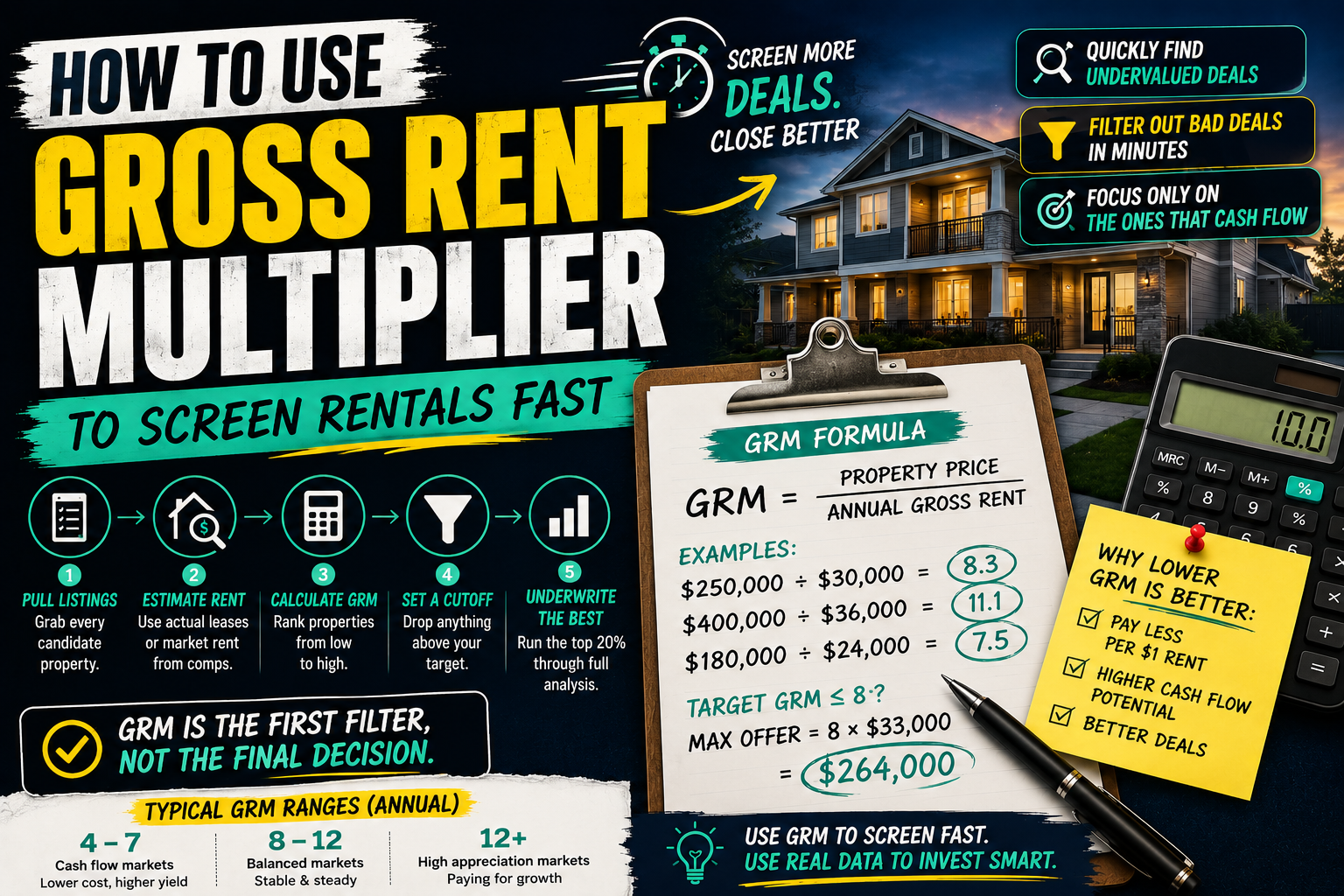
How to Use Gross Rent Multiplier to Screen Rentals Fast
Gross rent multiplier is a quick screening ratio: property price divided by annual gross rent. Learn how to calculate GRM and use it to filter deals fast.

How to Estimate Rehab Costs Before You Buy a Property
Learn how to estimate rehab costs before you buy a property using a room-by-room method, per-unit pricing, and a contingency that protects your margin.

What Is Equity Multiple? A Rental Investor's Guide
Learn what equity multiple is, how to calculate it on a buy-and-hold rental, and why it reveals total returns that IRR and cash-on-cash hide.
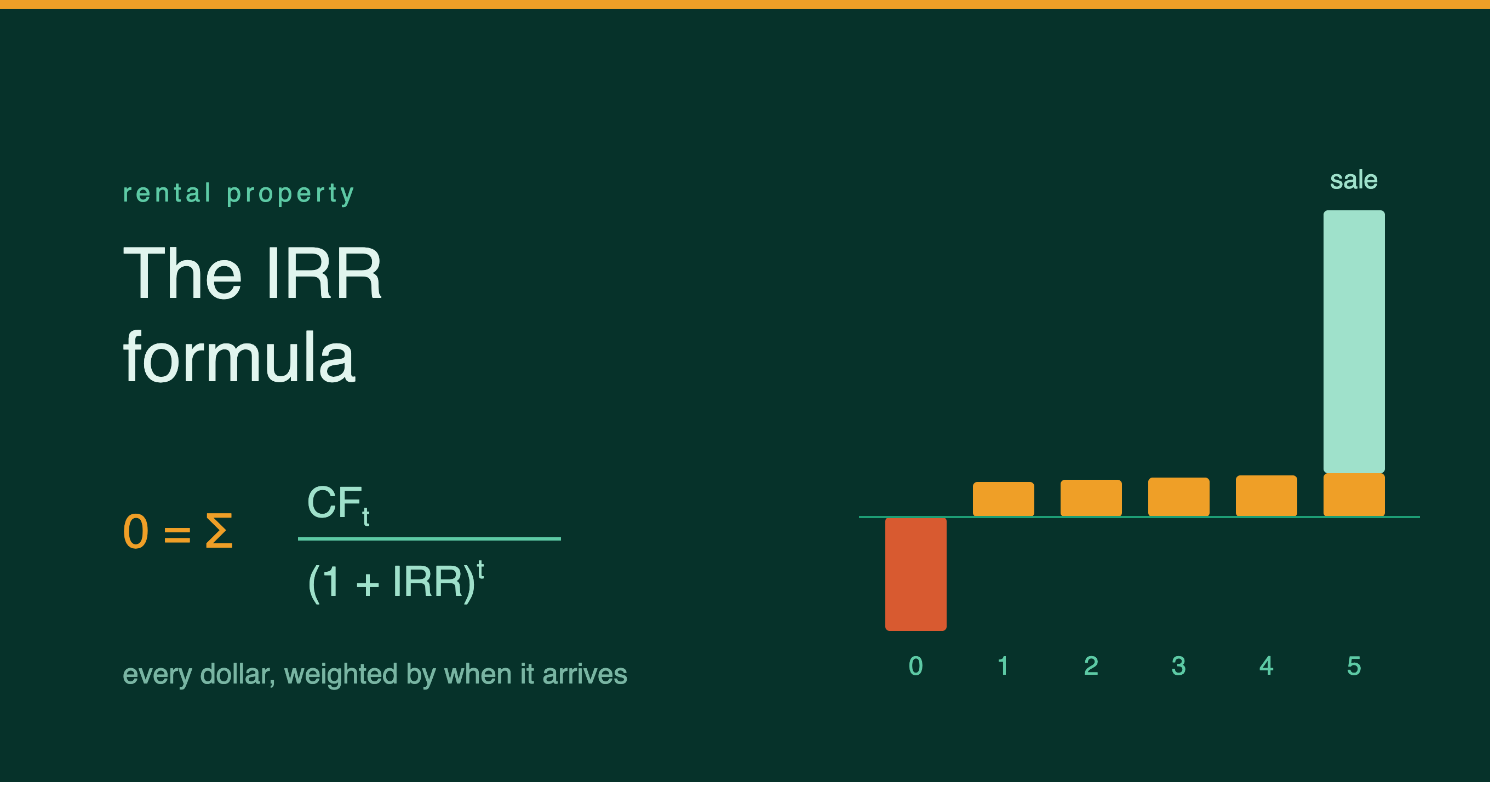
The IRR Formula for Rental Deals: A Step-by-Step Guide
The IRR formula finds the discount rate that makes a deal's net present value zero. Here's how to calculate IRR on a rental property, with a full example.
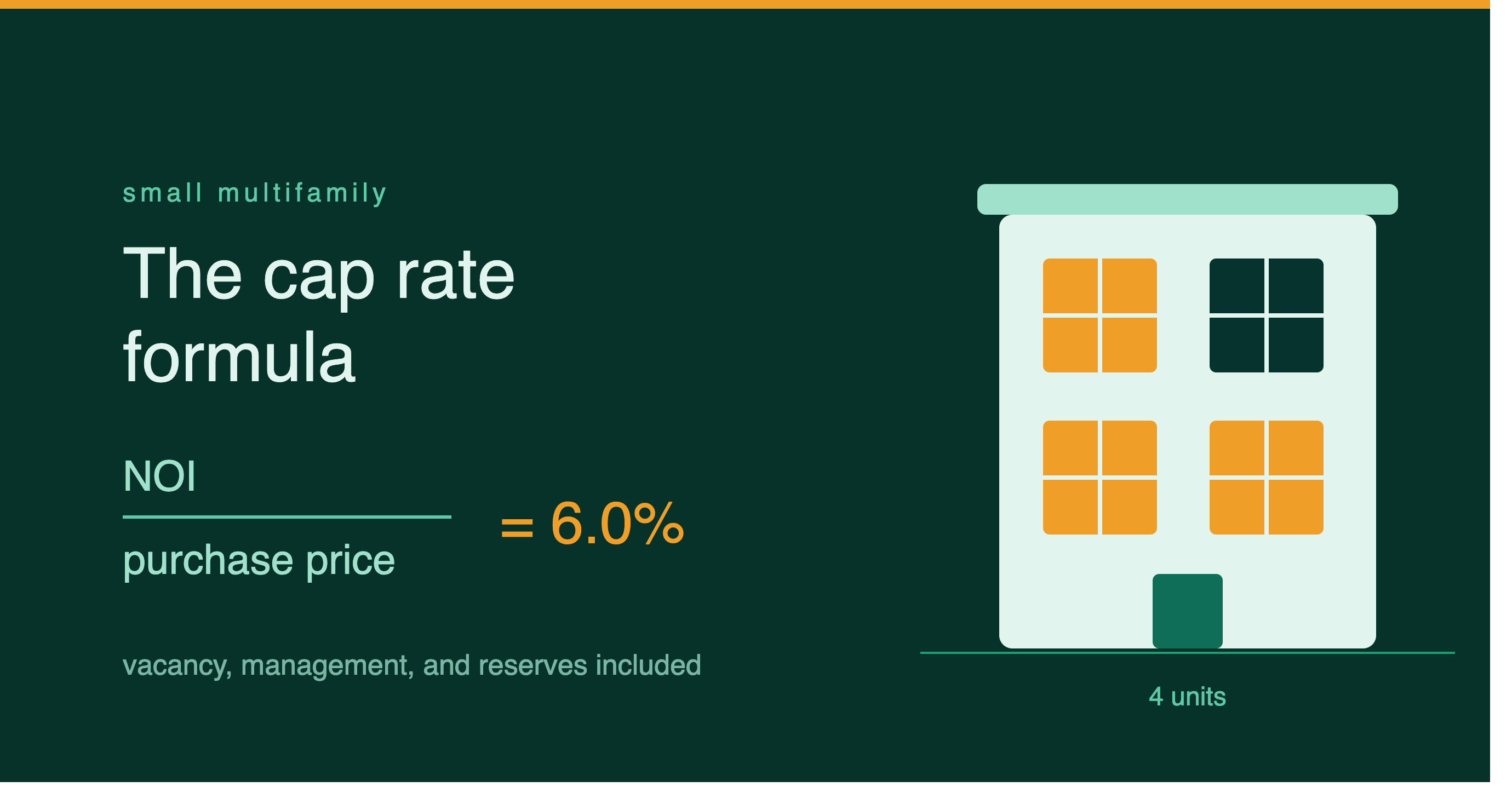
The Cap Rate Formula for Small Multifamily: A Real Example
Learn the cap rate formula for small multifamily deals with a real 4-unit example, NOI mistakes to avoid, and the ranges seasoned investors underwrite to.

The Buy & Hold Blueprint: Build Wealth One Rental at a Time
A step-by-step guide to the buy-and-hold rental strategy, including underwriting rules, cash-flow targets, and the risks that sink new landlords.

Cash-on-Cash vs. Cap Rate: Which Metric Should Drive Your Buy?
Cap rate and cash-on-cash return measure different things. Learn when each matters, how to calculate both, and the mistakes that wreck underwriting.

Fix & Flip: A Seasoned Investor's Playbook for Profit
A step-by-step Fix & Flip guide covering the 70% rule, budgeting rehab, timelines, and the mistakes that quietly kill your margin.

The BRRRR Method: How to Recycle Your Capital
A step-by-step BRRRR playbook from an investor who's done the deals — the math, the refi trap, and the mistakes that wreck your cash-out.
 ▶
▶Best Out-of-State Markets for Rental Cash Flow
The best out-of-state markets for rental cash flow in 2026: two overlooked Midwest metros quietly returning double digits, with prices, rents, and my picks.
 ▶
▶Real Estate Investment Analysis Software vs Calculators
Real estate calculators run on static assumptions that are often wrong. See how real estate investment analysis software pulls live data to price deals accurately.
 ▶
▶How to Work With Real Estate Investor Clients
How to work with real estate investor clients: what they actually want, why deals stall, and the pre-analyzed report workflow that gets offers made faster.